
-
Overview
-
Context, Rationale & Significance
-
Objectives and Outcome
-
Session Plan
-
Resource Person
-
Important Information
-
Feedback of IKS 2024 & 2025
-
Poster and Brochure
UNDERSTANDING INDIAN KNOWLEDGE SYSTEMS
-THE THEORY & PRACTICE OF YOGA-
(In Light of Yoga Sutra, Upanishads & The Bhagwada Geeta)
30 hours – Online Certificate course from 15th August, 2026 to 19th November 2026
Course Registration Link: https://forms.gle/yD6maNDri2Ga6N11A
निर्विचारवैशारद्येऽध्यात्मप्रसादः॥४७॥
Yoga Sutra, Samadhi Pada, 47
When one attains the perfection of having a mind free from thoughts, then flows the peace, spiritual clarity and grace of the inner Self.
एको वशी सर्वभूतान्तरात्मा एकं रूपं बहुधा यः करोति।
तमात्मस्थं येऽनुपश्यन्ति धीरास्तेषां सुखं शाश्वतं नेतरेषाम् ॥
Katha Upanishad, 2.2.12
The Eternal One, becomes many, residing in the inmost self of all beings. Happiness belongs only to that Seer who is able to experience and see this One among All, not to others (who are unable to experience this Oneness
प्रसादे सर्वदु:खानां हानिरस्योपजायते |
प्रसन्नचेतसो ह्याशु बुद्धि: पर्यवतिष्ठते
Bhagwad Geeta, 2.65
This spiritual knowledge once gained, destroys all kinds of suffering. With a tranquil and serene mind, soon the intellect of that one, becomes firmly established in this Knowledge
Life creates institutions; institutions do not create, but express and preserve life. This is a truth we are too apt to forget…The fond attempt to become great, enlightened and civilized by borrowing European institutions will be an equally disastrous failure
-Sri Aurobindo
The Case for Indian Knowledge Systems
In 2000 years of economic history, India contributed to almost 40 % of the world GDP for 1000 years and remained a major economic power till 1850. (The World Economy, A Millenial Perspective, Maddison Angus, 2001) It is only in the last 150 years that it lost this position and became a marginal player in world trade. This superlative economic performance was achieved without the abuse and exploitation of nature which we are a witness to since the industrial revolution of Europe till present. This was a model of life in which economic growth and ecology were not positioned against each other. How this was conceived and achieved in reality? What was the vision of the rishis, our forefathers, who conceived, designed and developed a way of life which is based on reverence for all existence? What was their understanding about life and its meaning?
Ananda Coomaraswamy, in his article on What has India Contributed to Human Welfare, which is included in his book, The Dance of Shiva, observes, “The heart and essence of the Indian experience is to be found in a constant intuition of the unity of all life, and the instinctive and ineradicable conviction that the recognition of this unity is the highest good and the uttermost freedom. All that India can offer to the world proceeds from her philosophy. This philosophy is not, indeed, unknown to others - it is equally the gospel of Jesus and of Blake, Lao Tze, and Rumi - but nowhere else has it been made the essential basis of sociology and education.”
The Uniqueness of Indian Knowledge Systems
The genius of the Indic way of life was not the discovery of the infinite and the eternal in the finite world, but this discovery and understanding was used to design a culture and civilization which aimed to realize this infinite and eternal aspect for every human life. Again, to quote Coomaraswamy, “Where the Indian mind differs most from the average mind of modern Europe is in its view of the value of philosophy. In Europe and America, the study of philosophy is regarded as an end in itself, and as such it seems of but little importance to the ordinary man. In India, on the contrary, philosophy is not regarded primarily as mental gymnastics, but rather, and with deep religious conviction, as our salvation (moksha) from the ignorance (avidya) which forever hides from our eyes the vision of reality. Philosophy is the key to the map of life, by which are set forth the meaning of life and the means of attaining its goal. It is no wonder, then, that the Indians have pursued the study of philosophy with enthusiasm, for these are matters that concern all.”
To make a small effort in this direction of understanding and interpreting the vast intellectual knowledge of our seers and sages, we offer a 30 hrs, online Certificate course on Understanding Indian Knowledge Systems- The Theory and Practice of Yoga
The Course has two broad parts: First 16 hours gives you a broad understanding of the IKS framework, its major focus areas and important texts which can be explored by the participant.
The second part of 14 hours takes you for a deep dive into three important texts of IKS: Patanjali Yoga Sutra, The Bhagwada Geeta and an Introduction to some Upanishads. We will learn to chant important Sutras, Shlokas and Mantras from the above texts and attempt to apply these into our lives. This certificate course attempts to blend the theory and practice of IKS by making it more relevant at a personal level for the participant.
Indian civilization is like an eternally old banyan tree, spreading its branches deep, far and wide all around the world. It is the oldest surviving tree in the garden of humanity, overlooking the millenniums and being a silent witness of all the seasons of world life. By being near it, knowing and understanding it, we also can experience a glimpse of the eternal within us, know and understand that part of us which is in time but also beyond time, which is in space but transcends space. Once known and understood, we become one with the eternal or Sanatana within us.
CHITI, Narmada College of Management
Bharuch – Shukla Tirtha Road, P O Zadeshwar, Bharuch – 392011
Phone: 02642-230595, Mobile: 9408069039, 7405224435
Email: subhashyadav@ncmbharuch.ac.in, rakeshpanchal@ncmbharuch.ac.in
Website: www.ncmbharuch.ac.in
Link for registering at CHITI: https://forms.gle/zaQmZZfhfE19ocQ48
Context and Rationale:
In the present context, we have a knowledge culture where all the important theories and frameworks of thinking have been imported from the West and we merely ape or at best adapt these theories to suit our reality. Our structures of business, government, education and research have been built and are sustaining themselves on these frameworks. If the developed world opened its doors to all of us, a high proportion of our business, political and educated elite would perhaps themselves prefer to migrate to these supposedly prosperous and functioning areas of the world.
This has also resulted in a situation where most of us, either in education, business or policy making, just play act ritualistically standard foreign prescriptions to our local problems which have no meaningful relation to our reality and without a larger purpose for our benefit. In this process of imitation, so called development of our society, the innate talent, resources and skills of our people are being continuously eroded. There is not a single example of any nation becoming great and powerful by borrowing and imitating concepts, theories and organization structures from an alien knowledge tradition.
Significance:
“We are not at all deceived by the illusion of progress, but, like some of our European colleagues, desire "the coming of better conditions of life, when the whole world will again learn that the object of human life is not to waste it in a feverish anxiety and race after physical objects and comforts, but to use it in developing the mental, moral, and spiritual powers, latent in man.”
– S C Basu, quoted by Coomaraswamy.
This course introduces the learners to the rich and varied knowledge traditions of India from antiquity to the present. This also helps the learner to know and understand their own systems and traditions which are imperative for any real development and progress helping them to think independently and originally with Indian frameworks and models for solving the problems of present day.
Course Objectives:
By the end of the Course, participants will be equipped with the knowledge and understanding related to:
First Part: 16 Hours – The IKS Framework, Corpus and Major Approaches
- Indian Knowledge Systems: Origin, Evolution and their unique approach towards understanding Reality
- Introduction to Sanskrit Language and the Vedic Corpus
- Indian Knowledge Approaches Towards: Time, Language, Knowledge, Environment,
- Indian Sciences of Life and Mind
Second Part: 14 Hours – Application of IKS principles for
- Self-Exploration and Self Knowledge for Personal Effectiveness:
- Yoga Sutra – Samadhi and Sadhana Pada
- Bhagwada Geeta – Selected Verses from Chapter 2, 3, 6, 12, 14, 15, 18
- The Upanishads – Excerpts from Katha, Mundaka and Mandukya Upanishad
Course Outcomes:
For Students:
- Digital Certificate from CHITI and Narmada College of Management – Course of 30 hrs
- They will understand and appreciate the rich heritage that resides in our tradition
- Inculcate Self Understanding within the student in the light of Indian Knowledge Approaches
- Learn to appreciate the need and importance of Sanskrit in getting to the roots of the philosophical concepts
- Being primed for practices that will prepare one for the inner-journey to discover the Self
For Teachers:
- Digital Certificate from CHITI and Narmada College of Management
- To improve mindfulness and cultivate understanding, ultimately leading to effective process of teaching
- Learn to integrate these teachings in their day-to-day living
- Learn to appreciate the origin and development of Indic thought and practices from ancient to current times and sharing it with their students
For Others:
- Digital Certificate from CHITI and Narmada College of Management
- Understand the context of Indian way of Life and Living and its relevance to the present
- Become familiar with Yoga psychology as a pathway to self-knowledge and transformation
- Being primed for practices that will prepare one for the inner-journey to discover the Self
- Personal effectiveness leading to their organizational effectiveness
What do you get along with the Course:
- Well-Researched Course Handout and Material related to IKS
- Understanding of the history and evolution of Indian Intelligence Tradition
- How to apply this knowledge to relate to personal and institutional life
- Resources (E-Books & Articles) on Indian Knowledge Systems
- Links to video and audio lectures on IKS
DETAILED SESSION PLAN OF THE COURSE
 |
Introduction: Indian Knowledge Systems–(2+2 hrs)
Conception and Constitution of Knowledge in Indian Tradition, The IKS Corpus, Nature and Character of Knowledge, Means of Knowledge of Reality –Plato’s Cave vis a vis Indian view of Reality, Sanskrit Language – Origins, Structure and Unique Characteristics of the Sanskrit Language, Role of Sanskrit in NLP |
|
| Indian Knowledge Approaches-I (2+2 hrs)
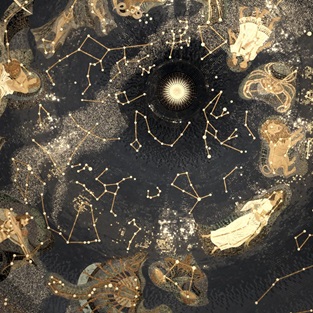
Time & Language – Cycles of Time, Measurement of Time, Knowledge of Time – The Science of Light. Language : Components of a language, Logic for Sentence Construction, Phonetics, Levels of Speech,
|
 |
|
 |
Indian Knowledge Approaches-II (2+2 Hrs)
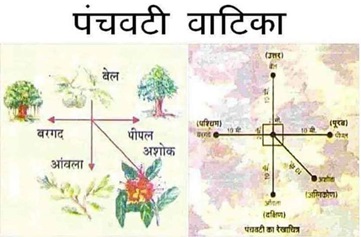
Knowledge Framework & Classification: Pramana, Prameya and Samasya, Framework for establishing Valid Knowledge Environment – Concept of Nature in Indian Tradition, Panch bhutas – Elements of Nature, Concept of Rta, Sacred Environment, Panchvati
|
|
| Sciences of Life and Mind (2+2 Hrs)
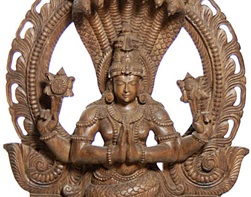
The Science of Life – History and Basic Principles of Ayurveda, Prana, Ojas and Tejas, Health, Balance and Routine in Ayurveda The Science of Mind – Origin, Nature and Evolution of Yoga, Types and Schools of Yoga, Yoga Darshana
|
 |
|
 |
Self-Exploration and Self Knowledge – I (2+2 Hrs) -Patanjali Yoga Sutra
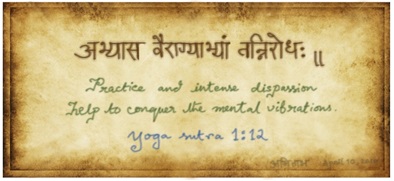
SAMADHI PADA: The Nature of the Mind, Concept of Abhyaas, Vairagya and Ishwarah, Obstacles to the stability of the Mind -Antarayas, Methods to Stabilize the Mind, Ritambhara Prajna – Fruit of the Stability of the Mind
|
|
| Self-Exploration and Self Knowledge –II (2+2 Hrs) –Patanjali Yoga Sutra
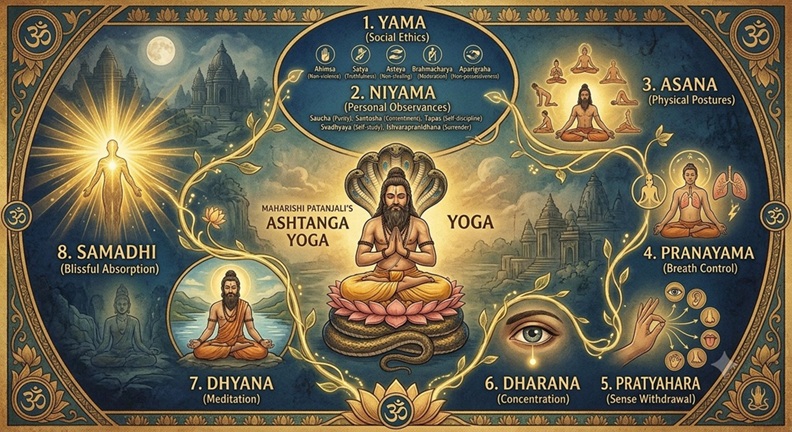
SADHANA PADA: What is Kriya Yoga, Causes of Suffering: Concept of Kleshas – Avidya, Asmita, Raga, Dvesha, Abhinivesha, What is Dhyana, Outline of Ashtanga Yoga – Yama, Niyama, Asana, Pranayama, Pratyahara, Dharana, Dhyaana, Samadhi Concept of Vibhuti -Spiritual Powers
|
 |
|
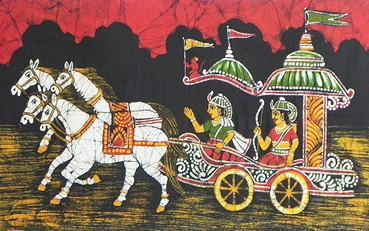 |
Self-Exploration and Self Knowledge – III (2+2 Hrs) – The Bhagwada Geeta
Bhagwada Geeta –The text and its relevance, Gnaneshwari, Core Concepts – Tattva Darshi, Types of Buddhi, Buddhi Yoga, Samatva, Sthitiprajna, Prathistit Prajna, Brahmi Sthiti Concept of Yoga, Characteristics of a Bhakta, The Three Gunas, The World Tree, Moksha
|
|
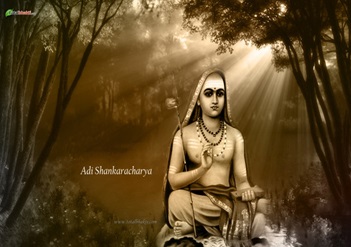
| Self-Exploration and Self Knowledge – IV (2 Hrs) – The Upanishads
Upanishads as text for Self-Knowledge and Self Realization – Extracts from The Katha, Mundaka and Mandukya Upanishads for Self-Exploration and Self Knowledge
|
 |
|
30 hours of interaction spread over 15 weeks
Classes on every Thursday Evening 6:00 PM to 8:00 PM
Faculty:
Dr. Subhash Yadav, Associate Professor, Narmada College of Management, will be the principal faculty for the course. In addition, we had the below mentioned IKS experts who shared their knowledge and expertise with previous participants of the course. Some of them will be invited for this batch as well.
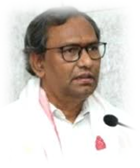 |
Dr. Rajnish Mishra, Professor, Jawaharlal Nehru University, New Delhi, |
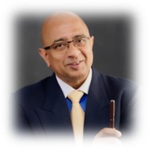 |
Dr. Rajsekhar Krishnan, Yoga Teacher & Management Consultant, Bangalore, |
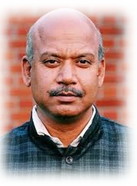 |
Dr. Sampadananda Mishra, Professor, Rishihood University, Sonipat, Haryana
https://rishihood.edu.in/rishihood-team/prof-(dr-)-sampadananda-mishra |
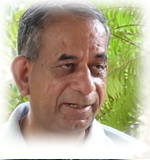 |
Dr. Alok Pandey, Sri Aurobindo Ashram, Puducherry |
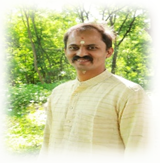 |
Dr. Jayachandran Surendran, Faculty Member, IIIT, Hyderabad |
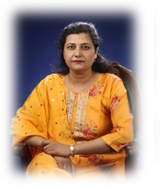 |
Dr. Vandana Khurana, Prof. of Music, Rajasthan Sangeet Sansthan, Jaipur |
IMPORTANT INFORMATION ABOUT THE COURSE
- Medium of discussion in the sessions: English/Hindi
- Eligibility: Anyone interested in the contents of the course.
- The minimum contribution for the course is Rs. 2001/-.
- Fees is to be paid to: Account name: Narmada College of Management, Account No. 13140200000037, Bank of Baroda, IFSC Code: BARB0GNFCOM
- The duration of this course is 15 weeks of teaching-learning with 30 contact hours, spread over a period of 3 months, from Inaugural Session on Saturday, 15th August, 2026 to Thursday, 19th November, 2026
- Online classes will be held on every Thursday, 6.00 pm to 8.00 pm - 2 hrs per week. The last 30 minutes of the session will be for live interaction and question answers. Detailed session wise plan will be shared with the registered students.
- Classes will be conducted online via google meet. The participants will have to ensure the availability of proper device and internet connectivity for attending the classes.
- The online session recordings will be made available to the registered students of the course via the Learning Management System – Moodle. Additional reading material in E-book format, power point presentations, developed for this course will be shared with the participants via the LMS on Moodle.
- The Evaluation will be based on participation in the sessions, and a final online examination at the end of the course.
- Digital Certificate from CHITI and Narmada College of Management will be provided to the students who have regular attendance and a qualifying score of 60% in the final examination.
30 hours of interaction spread over 15 weeks, Classes on every Thursday Evening 6:00 PM to 8:00 PM
Link for Registration of the course: https://forms.gle/yD6maNDri2Ga6N11A
For any clarifications/details please feel free to contact: subhashyadav@ncmbharuch.ac.in, rakeshpanchal@ncmbharuch.ac.in Cell No. 9408069039, 7405224435
This certificate course is being offered from the Centre for Heritage of Intelligence Traditions of India (CHITI) an Indic study and research center of Narmada College Campus. The center is located on the banks of Maa Narmada, with a more than 300-year-old banyan tree in the campus as its inspiration, at the building of Narmada College of Management, a constituent College of Narmada College Campus. The center has a small library related to various aspects of Indian Knowledge Systems and Indian Civilization. Work on a Digital Library of articles, books and a monograph on Indian Intelligence Traditions is in progress. A discussion cum counseling room is available for visitors and guests to get more information about Intelligence and Knowledge traditions of India.
We invite you to join us in this journey of self-exploration and self-discovery of our culture. We will keep you informed of the latest happenings and events conducted under this center. Join us by filling this registration form.
Link for registering at CHITI: https://forms.gle/zaQmZZfhfE19ocQ48
FEEDBACK RECEIVED FOR THE COURSE -UNDERSTANDING INDIAN KNOWLEDGE SYSTEMS - 2025
I got a lot of clarity, depth of understanding from these sessions. Many renowned experts of IKS were part of this course, and the practical aspects of Upanishads, Bhagwada Geeta, music and art were discussed in much detail. I have developed an interest in Yoga after attending this course and I have also registered for a Sanskrit course as well.
Dr. Rajendra Inamdar, Professor, KLS GIT(MBA) Belgaum, Karnataka
It has been a very enriching learning experience; The sessions were insightful, clear and well organized. I look forward for more such learning experiences and opportunities related to IKS
Bindya Rajesh, Educationist, Chennai, Tamilnadu
I am already a faculty of English language, but this course was very well articulated and it clarified my basics about IKS, and as an Academician many of my doubts got cleared by attending these sessions. Because of this I could quench the thirst of my students, who ask me many questions related to IKS.
Dr. Abhimanyu Billawaria, Guest Faculty, Central University of Jammu, Jammu & Kashmir
I come from a place where the written script came much later, and all knowledge was transmitted orally from one generation to another. The honest reason I joined this course was to know how to situate our knowledge traditions in the larger framework of IKS. The session on Ayurveda was a light bulb moment for me. It made me realize that we have also lot of traditional healing systems which are yet to be documented. The course has served as a compass if not a blueprint for a person like myself and it has laid the foundation for integrating the indigenous knowledge traditions into the larger framework.
Prof. Daphibahun Lyngdoh, Sankardeva College, Shillong, Meghalaya
I was a student of the 2024 edition of the course, and I joined again to take my understanding of IKS to an advanced level. From a student of IKS, now I want to become a promoter of IKS. I referred to all the preparatory and reading material of the course, especially the writings of Ananda Coomaraswamy, and I refer to them even after completing the course. We may belong to any stream or discipline but this knowledge connects us all through this course we are able to solve numerous queries of our students related to IKS.
-Dr. Mayura Patil, Satish Pradhan Dnyansadhana College, Thane, Mumbai
I keep coming back to this course is because though IKS is horizontal learning, by attending this course I get a vertical depth of knowledge about IKS. I am able to practically relate the teachings of Ramayana, Mahabharata and Bhagwada Geeta in teaching industry professionals and MBA students. The session on dance and temple architecture was a welcome addition in this edition of the course.
Prof. B Ramanan, Corporate Trainer, Life Coach & Management Consultant, Mumbai
It was an exploratory journey and I was able to meet lot of like-minded people in this exploration of IKS through this course. It has planted valuable seeds of introspection in my mind. I was able to get a glimpse of the holistic wisdom embedded in our scriptures and it was a learning experience which rejuvenated my thirst for right knowledge and understanding.
Dr. Swapna Nair, S R Luthra Institute of Mgmt, Sarvajanik University, Surat, Gujarat
The contents and compilation of this course was excellent. The expert sessions were amazing. I belong to Chemistry and Mathematics area and from this course I got an inspiration to relate my domain of knowledge with IKS.
Dr. Mahendra Singh Pawar, Amravati, Maharashtra
The course was very enriching, I am working in the area of the Science of Mantra and I am doing some research on it as well, and during this course I wrote a paper which will be published by Springer soon. The course appealed to me not only at the Sthula Sarira level but it was a great learning for the Sukshma Sarira as well.
Dr. Nitin Kulshrestha, Associate Professor of Finance, Christ University, Noida, UP
I am probably the youngest learner in this group. I got the basic idea about how to proceed in this domain of IKS from this course. Especially the sessions related to Consciousness appealed to me and I want to further develop my knowledge in this area
Prof. Parth Naik, Vidya Bharati Trust MBA Institute, Bardoli, Gujarat
FEEDBACK RECEIVED FOR THE COURSE INTRODUCTION TO INDIAN KNOWLEDGE SYSTEMS - 2024
The entire journey was like a Chappan Bhog (of Indian Knowledge) where every dish was served and after tasting each dish, one can decide that which one you want more and then delve deeper into it. The references given were very useful like that of Yogi Sri Krishnaprem, Ramdass, Sri Aurobindo and many other pioneers of IKS. Looking forward, I personally will be interested in taking one topic say Bhagwad Geeta, and especially the Dynaneshwari commentary by Sant Dynaneshwar on it.
-Prof. B Ramanan, Corporate Trainer, Life Coach & Management Consultant , Mumbai
The classes were very interesting and interspersed with audio- video clippings, discussions and sharing by the participants. We were a quite heterogenous group of students, teachers, industry professionals, which made the learning quite good. I would certainly join the future courses by CHITI.
-Dr. Rajlakshmi Datta, Dayanand Brijendra Swaroop P G College, Dehradun
I did this course for the second time and I was able to delve deeper into the core concepts of Indian Knowledge Systems. I feel this is the real knowledge which leads us to a greater understanding of our outer and inner worlds leading to peace and joy in our life.
-K Ashok Chakravarthy, Operations Manager, GAIL India Limited, Rayagada, Odisha
IKS is not merely about knowledge, it is also embarking on a journey of spirituality and self-discovery. I think that this course has already set me on that path. I also realized that there is so much to learn and explore and I would be interested in future advanced courses related to IKS. I have been enriched a lot after completing this course.
-Dr. Shalini Wadhwa, Associate Professor, NMIMIS, Mumbai
The Course was very well curated and being from an Architecture background, I was wondering in the beginning that how it will go ahead, but it was a very good experience, the core faculty and the guest resource persons were very knowledgeable and it enriched the learning of all of us.
-Architect Vaishali Latkar, Dr. Bhanuben Nanavati College of Architecture for Women, Pune
I thoroughly liked the journey of 15 weeks of this IKS course. It was interactive and discussion-based course where we learned and understood a lot. I would urge CHITI and Narmada College of Management to launch some advanced courses related to IKS.
-Dr. Mayura Patil, Satish Pradhan Dnyansadhana College, Thane, Mumbai
For a working professional like me, It was a totally new orientation towards our ancient knowledge systems. I thoroughly enjoyed all the sessions and for a couple of sessions which I missed, I had the session recordings with me, which allowed me to catch up later.
-Vijay Samala, Senior HR Manager, Reid & Taylor, Bharuch
I also did this course for the second time. I am an industry professional working with an MNC; hence it was not related to my professional work, but it enriched me personally leading to a greater understanding of myself as a person and also about our ancient heritage. I will certainly join further courses whenever they are launched from the centre.
-Dilip Kumar, Regional Service Manager, Perkin Elmer India, Bharuch